


.svg)



.jpg)
In Antwerp, some of the most promising healthcare innovations emerge at the intersection of academic research, clinical practice, and entrepreneurship. They collaborate within an ecosystem that not only shares knowledge but also turns ideas into tangible solutions for patients. At the heart of this network are the University of Antwerp (UAntwerp) and the Antwerp University Hospital (UZA). Their long-standing partnership ensures that research, training, and innovation operate in tandem while smoothing the path from concept to real-world impact.
“Many innovations fail because they don’t align with clinical practice,” says Kris Bonnarens, liaison valorization manager for UAntwerp and UZA. “By involving clinicians from the beginning and focusing on a concrete clinical problem and co-creation, the chances that a solution will be accepted and implemented increase significantly.”
The collaboration between the university and hospital dates back to the 1970s, when the Faculty of Medicine and Health Sciences was established to create a learning and research environment intertwined with patient care. Since UZA became fully autonomous in 2005, the two institutions have functioned as an integrated academic ecosystem. Innovations can now move efficiently from laboratory research to clinical application, while complex issues such as GDPR compliance, access to patient data, and clinical regulations are effectively navigated.
Structured collaboration is another defining feature of Antwerp’s approach. “Hospital networks, primary care, companies, and representatives of the city of Antwerp all participate in structured stakeholder consultations, which increases both the speed and impact of innovation,” Bonnarens explains.
The ecosystem behind innovation
Antwerp’s strength as a healthcare innovation hub lies in its combination of expertise, infrastructure, and collaboration. Initiatives such as AntwerpHealth.AI and the Medical Devices Program demonstrate how this ecosystem translates ideas into practice by connecting researchers, hospitals, companies, clinicians, and data scientists.

“Complex health problems can only be solved by thinking and collaborating across faculties and institutions." — Kris Bonnarens
Thanks to its focus on data-driven healthcare projects, AntwerpHealth.AI enables research to be transformed into applications that can be directly tested in clinical settings. This integration has already led to spin-offs and software solutions that improve safety and efficiency in patient care.
Similarly, the Medical Device Program focuses on developing medical technology to design, test, and validate new devices. By pooling expertise and sharing resources, the program increases the likelihood that innovations are successfully implemented in clinical practice.
“My focus is on valorization: how do we ensure that research reaches the patients?” Bonnarens adds. “By structuring the collaboration in dedicated programs such as the Medical Device Program, expertise and infrastructure can be shared systematically and build-up knowledge can be re-used in follow-up projects. In this way we don’t have to reinvent the wheel each time., which accelerates innovation and creates insights that are transferable across projects.”
Two projects illustrate the ecosystem’s impact: Innocens, a joint spin-off from UAntwerp and UZA that uses AI to detect patient deterioration, and Femiset, a medical device that supports women with pelvic floor prolapse. Both show how ideas originating from research and clinical needs can grow into solutions that make a real difference for patients.
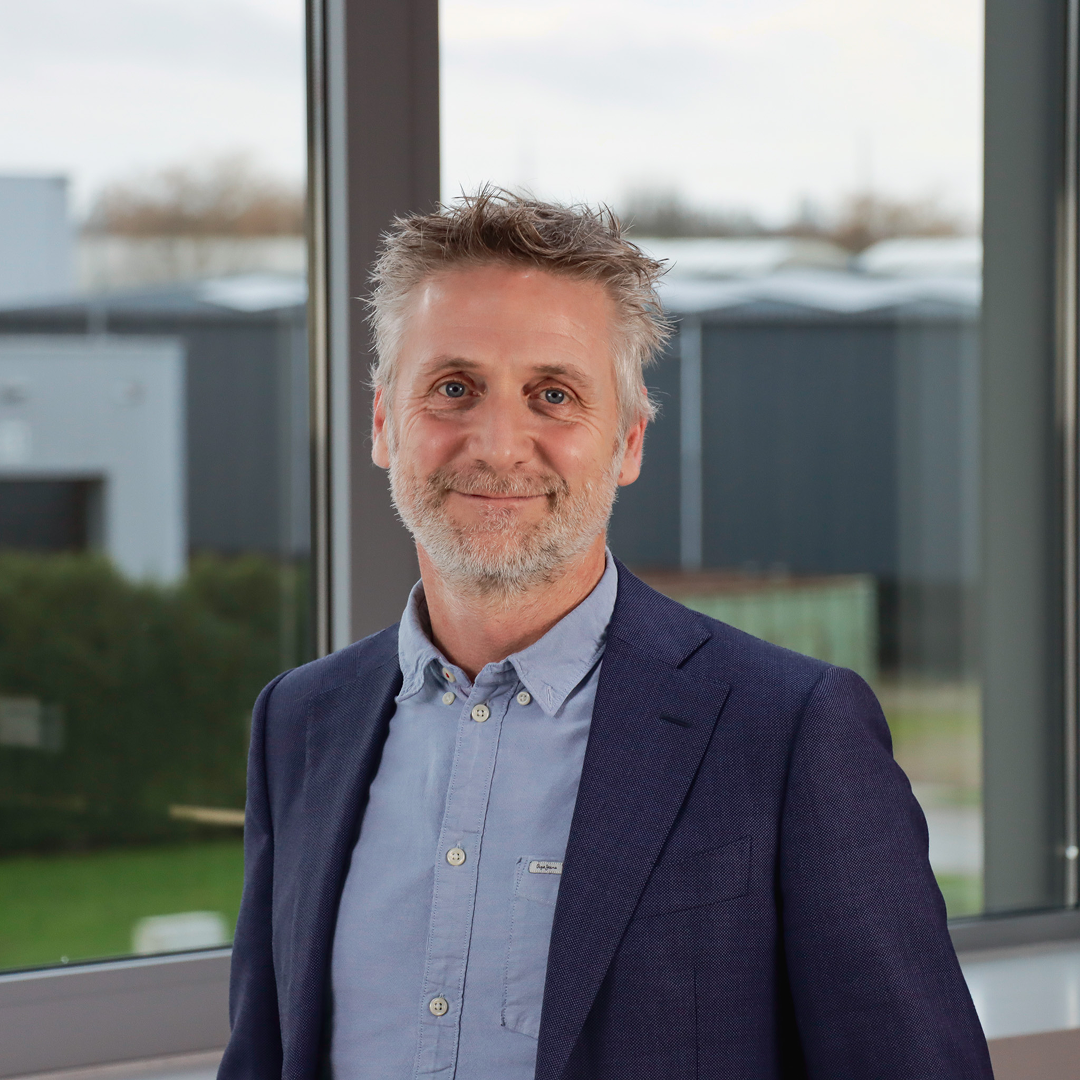
"Even though AI is at the base of Innocens, it’s not a magic solution, it’s a tool that connects domains and addresses real patient needs.” - David Van Laere
Innocens: AI in neonatal care
Innocens began as a deeply personal initiative. Neonatologist David Van Laere recalls, “As a parent and a doctor, I lost children to neonatal sepsis and wondered: could we have done more?” This question led him to develop AI-powered care-assist applications to help clinicians detect patient deterioration earlier.
These applications function like a digital nurse, continuously monitoring for signs of complications in the data. Traditional EMR systems and monitoring tools capture data but do not interpret it, often leaving patterns undetected. Innocens’ technology identifies these early warning signs, sometimes hours before a standard diagnosis would occur. In neonatal care, their sepsis application can detect infections approximately 11 hours earlier than conventional methods.
The platform integrates EMR data, monitoring systems, and data lakes, allowing live validation at the patient’s bedside. Clinicians receive actionable insights within a single environment, fully compliant with privacy regulations and Medical Device standards. Van Laere emphasizes the importance of the ecosystem: “Technology only works when it’s applied eco-systemically, from the clinician who knows the problem to universities illuminating its different aspects. Our platform is designed like a ‘Netflix for healthcare apps’: infrastructure, co-development, and regulatory compliance all in one — you choose which one you want.”
However, building such a platform comes with challenges. Van Laere outlines the critical steps: identifying a real-world problem, assembling a passionate team, protecting and scaling the technology, securing funding, and iterating continuously. While Innocens is still evolving, the platform lays the foundation for meaningful impact. “Even though AI is at the base of Innocens, it’s not a magic solution,” he says. “It’s a tool that connects domains and addresses real patient needs.”
Femiset: From clinical need to everyday solution
Femiset addresses a different but equally pressing need: perineal descent, a pelvic floor condition in which a woman’s perineum drops, making bowel movements difficult. Traditional solutions such as manual support, medication, pelvic floor physiotherapy, or even surgery, are often uncomfortable, invasive, or only partially effective. Femiset offers a non-invasive device that applies counterpressure as a lever placed between the legs. It is simple, portable, and designed to improve the quality of life for the estimated 1.3% of the global population — or 9 million European women — affected by this condition.

“Femiset replaces manual support during toilet visits and provides an easy, comfortable solution,” explains Sien Heirbaut. “It works like a lever: place the device between your legs and push the handle forward to apply counter pressure.”
The project originated from a clinical need identified by a pelvic floor physiotherapist at UZA. This need formed the starting point for a master’s thesis at the Department of Product Development at the UAntwerp, where a student developed the first functional prototype. The design was later refined through a Proof-of-Concept project in close collaboration with UZA. Throughout the development process, Lukas Van Campenhout, Associate Professor at the University of Antwerp joined the team as supervisor, and a team of surgeons and pelvic physiotherapists provided clinical input as a Medical Advisory Board, representing both practitioner expertise and patient perspectives. During the clinical testing phase, this team takes on the role of study personnel, with Dr. Sylvie Van den Broeck acting as Principal Investigator and leading the study. “Without UZA, we would never have reached this idea,” Heirbaut notes.
Because Femiset is a medical device, nearly a year of preparation for ethical approval of a clinical investigation in real patients was required, including preparation of 240 pages of documentation to ensure safety and compliance. With no similar products available for perineal prolapse, Femiset fills a significant gap. A patent has been filed, and an industrial partner is currently sought to handle commercialization through professional channels. Heirbaut and Van Campenhout reflect: “the most exciting moment was seeing the first high-end produced models and realizing that the product was really real.”
The next steps focus on completing a small clinical study, analyzing results, and moving toward market launch if outcomes are positive. But, regardless of the outcome, Femiset is a clear example of how co-creation within an academic-hospital ecosystem can lead to meaningful healthcare solutions.

“The most exciting moment was seeing the first high-end produced models and realizing that the product was really real.” - Lukas Van Campenhout
The power of collaboration
What unites Innocens and Femiset is their approach to innovation: starting from a real clinical need, collaborating across disciplines, and iteratively testing solutions with clinicians and patients. Both projects demonstrate how an ecosystem between university-hospital-industry produces solutions that are robust — both technically and clinically.
“Complex health problems can only be solved by thinking and collaborating across faculties and institutions,” Bonnarens concludes. “By starting from clinical needs and applying co-creation, innovations reach patients faster and more effectively.”
Programs such as AntwerpHealth.AI and the Medical Devices Program accelerate this process, ensuring that research does not remain confined to the lab but grows into products that improve lives and make healthcare more efficient.
.svg)


