


.svg)
How to get unscrewed: Start it @KBC rewrites the rules for founders looking for venture capital

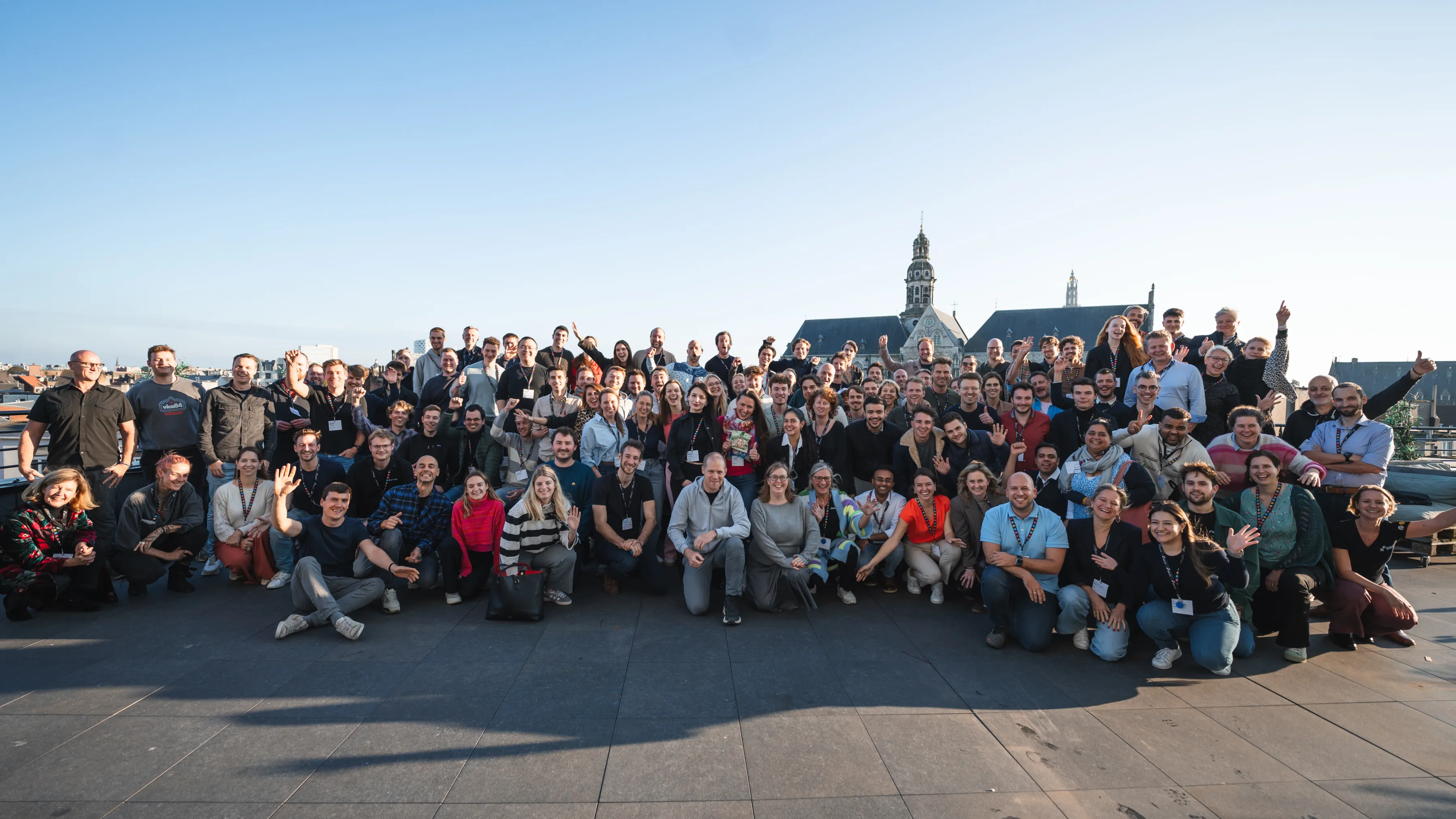
For founders, raising venture capital often feels like a rite of passage. But in reality, it’s a dynamic mix of incentives, timelines, and expectations. According to Lode Uytterschaut (founder & CEO of Start it @KBC) and Andy Gijbels (CTO of Start it @KBC and Investment Director of the Start it Fund), most founders don’t get “screwed” by bad luck — they get caught off guard by terms and pressures they didn’t fully anticipate. This understanding shapes the philosophy of Start it @KBC, Belgium’s largest startup accelerator.
The program is built around one simple principle: great startups should grow on their own terms. Unlike traditional accelerators, Start it @KBC takes no equity, charges no fees, and prioritizes access, network, and mentorship for the startups over their own immediate financial returns. As an added advantage, this model attracts startups that might not fit elsewhere — think of those overlooked by other accelerators because their background doesn’t match conventional expectations.
By keeping the program equity-free, the accelerator can admit more startups per cohort, and thus creating an alumni network so large and active that every challenge that a founder faces has likely been solved by someone before. With over 3,000 founders in their ecosystem, no problem is too big or too specific.
The power of network and mentorship
Through the years, Start it @KBC has built its success on scale and connectivity. Over its 11-year history, the accelerator has coached more than 1,900 startups, including nearly 600 female founders, making it one of the most inclusive startup programs in Belgium. The six locations across Belgium give startups the ability to host meetings, engage clients, and establish their presence in a professional setting. And it has proven its effectiveness. Start it @KBC’s growing network and alumni success (230 startups have raised over €1 million each) create a reinforcing cycle that continues to attract high-potential founders.
But more than physical spaces, it’s the network that defines the program. Mentorship isn’t abstract or theoretical; it’s founder-to-founder, and practically applied. Every startup has access to mentors who have faced similar challenges — whether technical, operational, or fundraising-related. Start it @KBC even developed an AI tool that matches startups with the right mentors and peers, effectively increasing the probability of “serendipitous” connections that can define a company’s trajectory. Uytterschaut and Gijbels describe this as creating luck: “by giving founders more opportunities to encounter the right people at the right time, the likelihood of breakthrough moments is amplified.”
The network’s scale also produces a tangible sense of belonging and credibility. Alumni successes, such as Aikido — the accelerator’s first unicorn — create visible proof of impact. Such success stories attract talent, partners, and investors, creating a self-reinforcing ecosystem where new startups are drawn to the accelerator precisely because others have thrived there.
Female founders, in particular, benefit from this network effect. Start it @KBC has supported nearly 600 female founders through the Thrive program, creating role models and a community that encourages inclusion in the tech ecosystem.

“By giving founders more opportunities to encounter the right people at the right time, the likelihood of breakthrough moments is amplified.” - Lode Uytterschaut & Andy Gijbels
Growth first, valuation second
One of Start it’s defining features is its focus on real business growth over inflated valuations. Where traditional VCs often push startups toward rapid scaling to maximize exit potential, Start it encourages revenue-driven growth.
Founders are coached to increase their sales, validate their market, and build sustainable businesses. The philosophy behind it is simple: demonstrating tangible traction naturally strengthens a company’s position for when they’re negotiating with investors later. Uytterschaut emphasizes that creating awareness is not the same as creating demand; real sales prove product-market fit, while hype alone does not.
This growth-oriented approach has multiple benefits. As startups improve their operations, the quality of subsequent cohorts rises. More promising startups attract more applications, which increases selectivity and ensures that the accelerator’s resources are always focused on high-potential ventures. This cycle strengthens the program while delivering measurable impact for the startups themselves.
A founder-friendly fund
To extend its impact, Start it @KBC — backed by a €100 million commitment from KBC Group — recently launched the Start it Fund, an evergreen vehicle designed to strengthen the Belgian start-up ecosystem. The move responds to a long-standing demand from founders within the accelerator: access to early-stage capital that aligns with the program’s founder-first philosophy.
The fund remains optional and fully embedded in Start it @KBC’s DNA. It is accessible exclusively to startups that have completed at least one year in the accelerator, ensuring that investments are made in teams with demonstrated traction, market validation, and cultural alignment. In that sense, the fund builds on an existing relationship rather than initiating a transactional one.
Diversity and a “pay it forward” mentality guide every investment decision. The fund evaluates startups based on merits and potential impact rather than pedigree, academic background, or prior affiliations. By maintaining those standards, the fund aims to widen access to capital for founders who might otherwise be overlooked, while protecting the culture that has defined the accelerator for more than a decade.
Structurally, the evergreen model is unlike traditional VC funds operating under fixed timelines and predefined exit horizons. The Start it Fund does not impose immediate liquidity expectations. Returns are reinvested into the next generation of startups, allowing the fund to sustain itself over time and reinforcing a self-perpetuating ecosystem of growth, guidance, and shared success.
Beyond the initial investment, the strongest performers may receive follow-on financing, ensuring continuity not only in capital, but also in strategic support. The ambition is not simply to finance startups — it is to remain a long-term partner in their growth journey.
Lessons in raising capital
Start it @KBC’s approach offers critical lessons for founders considering venture capital. Raising money is not inherently good or bad — its impact depends on alignment with a company’s goals. A VC investment introduces pressure: funds have a lifespan, shareholders expect returns, and terms often include board seats, veto rights, and other clauses that can shift control away from the founder. Accepting capital without fully understanding these consequences can limit flexibility and create misaligned incentives.
Uytterschaut and Gijbels stress that founders need to start with the most basic question: do you even want VC funding? If the answer is yes, then it’s a matter of under which conditions.
Their approach is to invest time, not just money. By observing startups closely over months, they can assess growth trajectories, team dynamics, and problem-solving capabilities — factors that are impossible to gauge in a few meetings. This intensive due diligence allows Start it to back startups that may not fit traditional profiles but have extraordinary potential.
Beyond capital: building sustainable impact
Ultimately, Start it @KBC is not just about funding or mentorship. It is about building an ecosystem where incentives are aligned and long-term growth takes priority over short-term pressure. By combining capital with guidance, network access, and strategic patience, the accelerator increases the odds of building resilient companies — not just fast-scaling ones.
Which brings us back to the central question: how do you get unscrewed?
Not by avoiding investors, but by choosing them deliberately. By understanding the terms. And by choosing partners who succeed when you succeed.
In a landscape often dominated by short-term metrics and high-stakes exits, Start it @KBC shows that strategic patience, mentorship, and founder-first principles can be just as — if not more — powerful than capital alone.
.svg)

.jpg)
