


.svg)
Preparing the Next Generation for a Digital-First World: Inside Digitale Wolven
%201.webp)
In today’s world, children grow up surrounded by technology. Yet digital literacy is not as intuitive as it may seem. Cindy Smits, General Manager at Digitale Wolven (NPO), explains that while kids may effortlessly swipe on a smartphone, more complex tools like laptops — especially those without touchscreens — often reveal gaps in their skills.
“From the moment the device is no longer a smartphone, you notice a big difference,” she says. “Using a mouse, a trackpad, typing numbers with shift—these are not intuitive for everyone.”
Access also varies depending on age and socioeconomic background. Older children are more likely to have encountered laptops through school, while kids from less privileged families often only have access to a smartphone at home. “In many households, parents use laptops for work, which gives their children an advantage. In other families, there may not be a computer at home at all. That creates a real gap,” Smits adds.
Who Digitale Wolven Is
Digitale Wolven focuses on bringing digital skills directly to children in schools. “We want to reach as many children and young people as possible — especially in the classroom — and help them develop digital skills,” Cindy explains. The organization provides instructors, technological equipment such as laptops, tablets, and robots, and removes logistical and financial barriers for schools.
“Often, the cost of transportation is higher than the activity itself. We eliminate that obstacle. We come to the school, bring the materials, and take over the class for two lesson hours. That way, there’s minimal time investment for teachers.”
In addition to school workshops, Digitale Wolven operates an open-access location in Antwerp. Children can drop in to use the internet or devices for homework, receive help with digital tasks, or borrow refurbished laptops. Through partnerships with companies and refurbishment initiatives, devices are collected, wiped, and prepared for reuse. Rather than giving laptops away permanently, Digitale Wolven loans them out, ensuring follow-up and sustainability.
From CoderDojo to classrooms
Cindy’s journey into digital education began as a volunteer at CoderDojo Belgium, the international network of coding clubs founded in 2011 in Ireland by James Whelton and Bill Liao.
While CoderDojo focuses on after-school programming, Cindy saw a valuable complement in their approach. “CoderDojo is amazing at engaging kids in their free time, and it inspired me to reach even more children through schools,” she explains. “Schools allow us to reach a naturally diverse group — different backgrounds, different talents, and a 50-50 balance of boys and girls — so together, both initiatives strengthen each other’s impact.”
That decision has paid off. Today, 46% of participants in Digitale Wolven workshops are girls. “Inclusion matters,” Cindy says. “Technology is built for everyone and used by everyone. So it should be shaped by everyone.”
Learning by Doing
At the heart of Digitale Wolven lies hands-on learning: it has to be fun. Children need to feel, ‘I can do this'.
Whether programming a robot to move forward, solving a logic challenge, or experimenting with code, small successes create confidence. “A robot driving ten centimeters forward may seem small. But for a child who thought they couldn’t do it, that’s a huge win.”
The workshops focus heavily on computational thinking — breaking problems down into logical steps — and encouraging curiosity. Instead of explaining everything upfront, instructors often respond to questions like “What does this button do?” with: “Try it.”
Discovery, experimentation, and immediate feedback are central. “It’s like chemistry class. It’s much more exciting to do experiments yourself than to only study the theory.”
Why It Matters
Early exposure helps children discover talents they didn’t know they had. Some may not become programmers —and that’s not necessarily the goal. The goal is digital self-reliance.
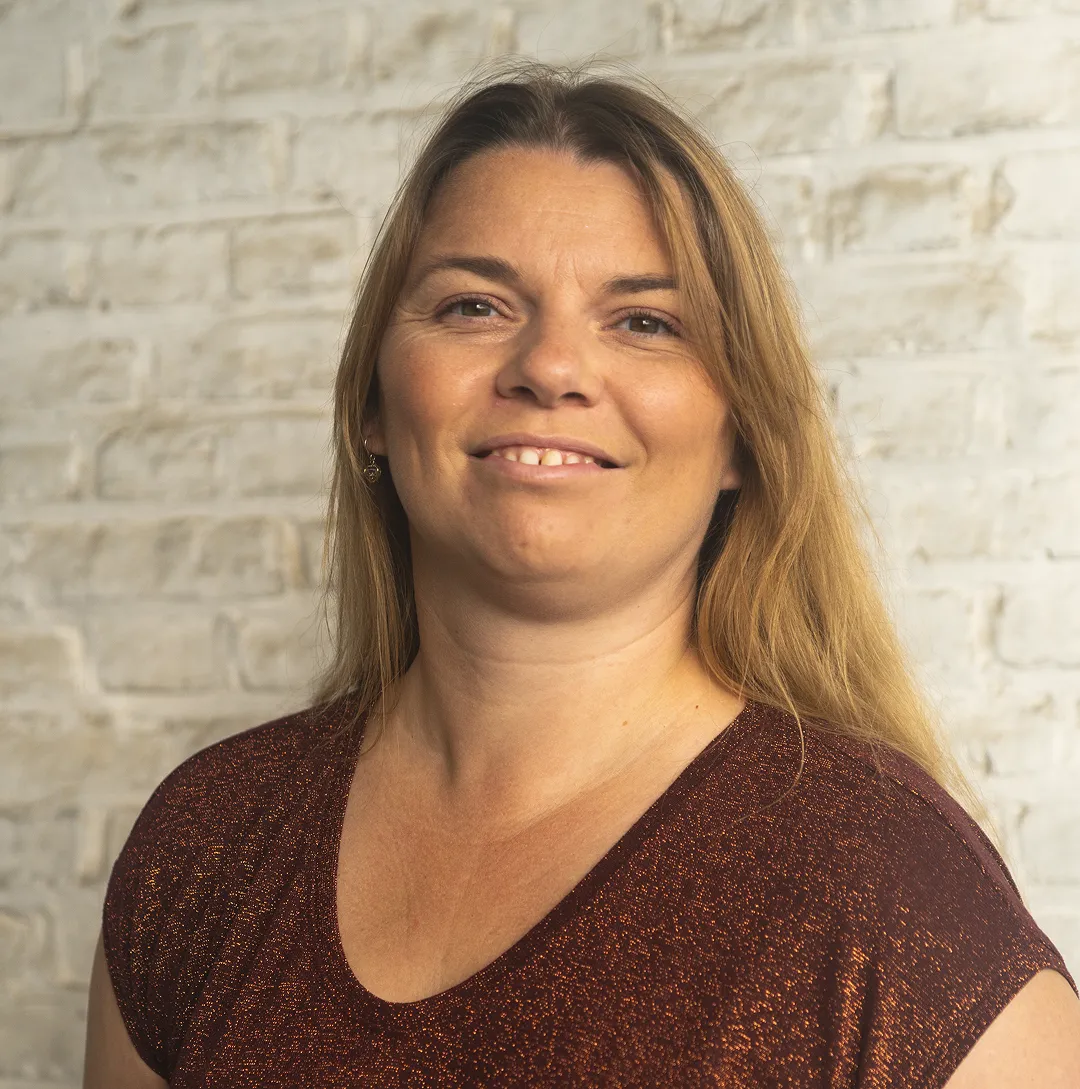
“If we can plant that ‘I can do this’- seed, then we’ve done our job.” - Cindy Smits
“Digital literacy is no longer optional. Just like reading, writing, and math help you function independently in the labor market and society at large, digital skills create self-reliance in a world where technology is everywhere,” Cindy explains. “We don’t want a generation that has to call a helpdesk for every small issue.”
A look ahead
For Cindy, the mission goes beyond teaching tools. It’s about mindset. Digitale Wolven aims to instil curiosity, confidence, and the belief that technology is not something mysterious controlled by others but something you yourself can understand and shape. “If we can plant that ‘I can do this’- seed, then we’ve done our job.”
Over the next five years, Cindy hopes Digitale Wolven will expand its reach and continue building an inclusive, future-ready generation equipped to navigate and shape a digital world. “I hope we can reach at least as many children as today — hopefully more,” she says. “And I hope there will be structural financial support from businesses or government. Because without funding, a non-profit can’t operate.”
Her biggest wish? That no young person ever has to be turned away. “If a child comes to us and says, ‘I need a laptop,’ I don’t want to say: come back next month because we don’t have any left.” Today, the scenario of a limited stock is reality. Meanwhile, across the corporate world, thousands of perfectly usable laptops are replaced every couple of years. The potential for reuse — and impact — is enormous.
Donate a laptop: a small gesture, a big impact
When companies donate laptops, Digitale Wolven ensures they are handled professionally. Devices can be securely wiped in-house or processed through their trusted partner, Digital for Youth, who provides certified data destruction, refurbishment, reporting, and even free pickup for large donations. Companies receive detailed documentation, including sustainability reporting and CO₂ impact metrics.
No part of a donated laptop is wasted: functional devices are reused, parts from unusable laptops are salvaged when possible, and everything else is recycled responsibly.
In the end, the scale of a donated laptop is noteworthy. “What may feel small to you can mean the world to a young person,” she says. “For you, it might be a device collecting dust on a shelf. For them, it’s the ability to do homework, to learn, to explore. That impact is much bigger than people realize.”
So, if you have any spare laptops lying around, fill in this form and give them a meaningful second life.
PS. Don’t forget to include a charger.
.svg)

.jpg)
